Gyeran Mari Discover the Simple Korean Rolled Omelette Recipe
There is something quietly comforting about turning a few humble eggs into something soft, golden, and beautifully layered. This Gyeran Mari: Discover the Simple Korean Rolled Omelette Recipe has been my go-to when I want something warm, quick, and just a little special without the fuss.
I first learned this Korean rolled omelette on a rainy Sunday, standing beside my aunt while the windows fogged up and the pan gave off that gentle sizzle. She showed me how patience over low heat makes all the difference. I have been making this for years now, especially on busy mornings or when I need a simple lunch that still feels thoughtful.
The eggs cook into thin, tender layers that smell rich and slightly sweet, with scallions adding a fresh, green bite. As you roll each layer, you can feel the soft structure come together under your spatula, warm and delicate.
It comes together in about 20 minutes, start to finish, and always disappears fast in my house. Even my husband sneaks extra slices straight from the cutting board. Grab a bowl, a pair of chopsticks, and your favorite non-stick pan.
What is Gyeran Mari: Discover the Simple Korean Rolled Omelette Recipe?
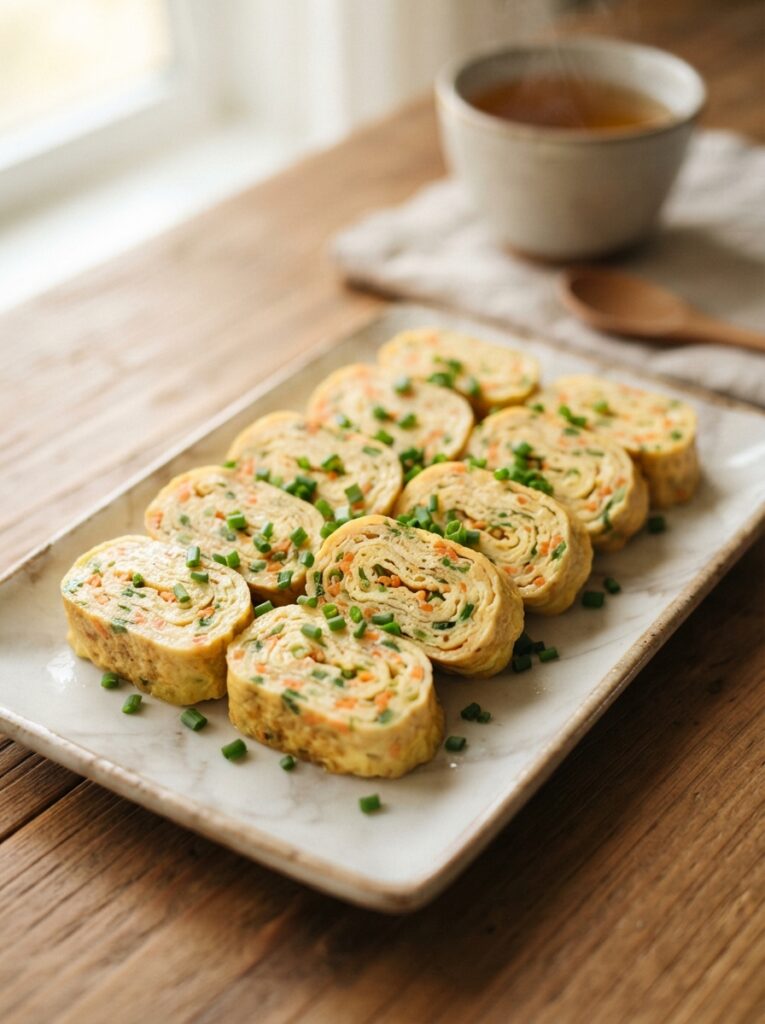
Gyeran Mari: Discover the Simple Korean Rolled Omelette Recipe is a classic Korean rolled egg dish made by cooking thin layers of beaten eggs and carefully rolling them into a soft, layered log, then slicing it into bite-sized pieces that are tender, lightly golden, and delicately structured.
It typically uses eggs, green onions, salt, and sometimes finely chopped vegetables like carrots, making it a simple Korean rolled omelette that feels both comforting and versatile. Each bite is soft and fluffy with a gentle savory taste, balanced by a fresh, slightly sweet crunch.
Often served as a side dish or lunchbox favorite in Korean cuisine, it brings warmth and color to the table.
You Might Also Love These Recipes
- Chicken Cordon Bleu Rolls Crispy outside with a gooey, cheesy center and savory ham layers in every bite.
- Homemade BBQ Sauce Thick, glossy sauce with a smoky aroma and a sweet tang that clings beautifully to grilled dishes.
- Caramelised Onion Tart Buttery crust topped with deeply sweet, golden onions that melt softly with every warm slice.
- Gluten-Free Salmon Pie Creamy, flaky filling with tender salmon and a comforting, rich texture that feels hearty yet light.
Why You’ll Love
- Soft, layered texture. Each slice is tender and fluffy, with delicate egg layers that feel light yet satisfying on the palate.
- Clean, savory flavor. Mild eggs meet fresh scallions and subtle seasoning, creating a balanced bite with a gentle, comforting taste.
- Beginner-friendly method. This Korean rolled omelette uses simple steps that become easy with practice, even if you are new to rolling techniques.
- Quick from start to finish. Ready in about 20 minutes, making it perfect for busy mornings or a fast, homemade lunch.
- Simple, fresh ingredients. Made with everyday staples like eggs and green onions, with optional vegetables adding color and crunch.
- Flexible and versatile dish. Serve it as a side, pack it for lunchboxes, or enjoy it warm or cold any time of day.

Key Ingredients
- Eggs. The heart of this Korean rolled omelette, creating soft, golden layers with a silky texture and mild flavor. Use fresh, room temperature eggs for smoother mixing and better volume.
- Green onions. Add a fresh, slightly sharp aroma and a gentle crunch that brightens each bite. Slice finely so they distribute evenly without tearing the delicate egg layers.
- Carrots. Bring subtle sweetness and a pop of orange color that looks beautiful when sliced. Grate or mince finely to keep the texture tender and easy to roll.
- Neutral oil. Helps create a glossy surface and prevents sticking while keeping the eggs light. Use a light oil like canola or grapeseed for clean flavor and smooth cooking.
- Milk or dashi (optional). Adds extra softness and a slightly creamy mouthfeel to the eggs. I often use a splash of milk for a fluffier, more tender finish.
- White pepper. Gives a gentle warmth without overpowering the delicate egg flavor. Use sparingly to keep the taste clean and balanced.
- Cheese (optional). Melts into creamy pockets that add richness and a soft stretch when warm. Use mild cheeses like mozzarella for a subtle, comforting twist.
- Spinach or zucchini (optional). Adds a fresh, earthy note and soft texture that pairs well with eggs. Squeeze out excess moisture to avoid soggy layers.
How to Make Gyeran Mari: Discover the Simple Korean Rolled Omelette Recipe
- Prep the vegetables. Finely chop green onions and grate carrots until small and even, creating a colorful mix that will fold smoothly into the delicate egg layers.
- Whisk the eggs. Crack eggs into a bowl and whisk until fully emulsified and silky, with no visible streaks, creating a pale yellow mixture that pours smoothly.
- Mix the filling. Fold vegetables into the eggs gently, distributing them evenly so every slice shows specks of green and orange without weighing down the texture.
- Heat the pan. Warm a non-stick pan over medium-low heat until lightly hot, then brush with oil for a thin, glossy coating that prevents sticking.
- Pour the first layer. Add a thin layer of egg mixture, tilting the pan to spread it evenly like a crepe, listening for a soft, gentle sizzle.
- Start the roll. When edges set but the top stays slightly glossy, lift and roll carefully with a spatula, keeping the log tight and smooth.
- Add and repeat. Push the roll aside, pour more egg into the empty space, and repeat layering, allowing each sheet to fuse softly into the roll.
- Finish and rest. Cook until lightly set with no wet spots, then transfer to a board and let it rest briefly, allowing the layers to firm gently.
- Slice and serve. Cut into even rounds with a sharp knife, revealing neat, golden spirals with a soft, tender bite and light aroma.
Zara’s Expert Tips
- Keep the heat low and steady. After making this 100+ times, I cook on medium-low so the eggs stay pale, soft, and tender without browning or turning rubbery.
- Whisk until fully silky. Take an extra 30 seconds to emulsify the eggs completely, creating a smooth, glossy mixture that cooks into delicate, even layers with no streaks.
- Cut vegetables very fine. Small, even pieces blend seamlessly into the Korean rolled omelette, giving clean slices and a balanced bite without tearing the soft egg structure.
- Roll while slightly glossy. Start rolling when the surface still looks a little wet, which helps layers stick together smoothly and creates that signature soft, cohesive spiral.
- Use the right pan size. A small non-stick pan, around 8 inches, helps control the shape and keeps each layer uniform and easy to manage.
- Trust gentle pressure. My grandmother always said to roll with a light hand, pressing just enough to shape without squeezing out moisture or making the texture dense.
How to Store
- Refrigerator storage. Store slices in an airtight container for up to 3 days, keeping them moist and tender while preventing that slightly eggy fridge smell.
- Freezer advice. Do not freeze, as the soft egg layers turn watery and spongy once thawed, losing their delicate texture and clean flavor.
- Make-ahead prep. Prepare and slice up to 24 hours in advance, then chill tightly wrapped so the layers stay neat and hold their shape.
- Revive leftovers gently. Warm in a covered pan over low heat for 2 to 3 minutes, restoring softness without drying or browning the eggs.
- Lunchbox packing. Pack cooled slices in small portions with rice or vegetables, keeping them firm, flavorful, and easy to enjoy at room temperature.

Variations and Substitutions
- Ham or crab version. Add finely chopped ham or imitation crab for a savory, slightly sweet bite that makes each slice feel richer and more filling.
- Cheese-filled twist. Layer in mozzarella or cheddar for a creamy, melty center that stretches slightly and adds a warm, comforting richness.
- Vegetarian packed option. Load with spinach, bell peppers, or zucchini for a fresh, colorful version with a soft yet slightly crisp texture.
- Spicy kick upgrade. Mix in a touch of gochujang or chili flakes for gentle heat and a deeper, bold flavor that lingers pleasantly.
- Low-carb simple version. Skip starchy add-ins and focus on eggs and herbs for a clean, protein-rich bite that stays light and fluffy.
- Kid-friendly mild style. Use just eggs and a little cheese for a soft, familiar taste with a smooth texture kids usually love.
- Budget-friendly swap. Use leftover vegetables or herbs from the fridge to create a flexible, no-waste version with fresh, changing flavors.
What to Serve
- Steamed white rice. Soft, warm grains balance the savory eggs and soak up flavor, creating a simple, comforting Korean-style meal.
- Kimchi. Bright, tangy crunch cuts through the rich, fluffy omelette, adding a bold, slightly spicy contrast that wakes up every bite.
- Grilled bulgogi. Juicy, caramelized beef pairs beautifully with the mild eggs, offering a savory-sweet depth and satisfying protein boost.
- Fresh cucumber salad. Crisp, cool slices with a light dressing add refreshing contrast and a clean, palate-cleansing crunch.
- Iced barley tea. Light, nutty, and refreshing, it complements the soft texture of the eggs without overpowering their delicate flavor.
- Simple fruit plate. Sweet, juicy fruit like melon or berries adds a bright, refreshing finish after the warm, savory dish.
Frequently Asked Questions
Can I make gyeran mari ahead of time?
Yes, you can make gyeran mari up to 24 hours ahead. Store it tightly wrapped in the fridge, then slice just before serving to keep the layers neat and moist.
How long does gyeran mari last in the fridge?
Gyeran mari lasts up to 3 days in an airtight container. After that, the texture becomes slightly rubbery and the fresh, mild egg flavor starts to fade.
Can I substitute the green onions?
Yes, you can swap green onions with chives or finely chopped leeks. They offer a similar mild onion flavor without overpowering the soft, delicate eggs.
Is gyeran mari gluten-free?
Yes, this Korean rolled omelette is naturally gluten-free when made with basic ingredients. Just check any added sauces or fillings to ensure they contain no hidden gluten.
Why does my gyeran mari fall apart?
Gyeran mari falls apart if the layers are too thick or cooked on high heat. Keep layers thin and roll while slightly glossy for a soft, cohesive structure.
Can I add cheese or other fillings?
Yes, cheese, ham, or vegetables can be added in small amounts. Keep fillings finely chopped so the omelette rolls smoothly and holds its shape when sliced.
How do I reheat gyeran mari without drying it out?
Reheat gently in a covered pan over low heat for 2 to 3 minutes. This keeps the eggs soft and prevents the layers from turning dry or rubbery.