Delicious Yaki Udon Noodles A Flavorful Journey into Japanese Cuisine
There is something deeply comforting about a hot pan of noodles hitting the stove, that quick sizzle and the smell of soy sauce rising into the air. This Delicious Yaki Udon Noodles: A Flavorful Journey into Japanese Cuisine recipe has been my answer to busy evenings when I still want something bold, savory, and just a little indulgent.
I first started making yaki udon after a rainy Tuesday when my mom showed me how to turn a handful of fridge staples into something that tasted like street food. The kitchen windows were fogged, the cutting board was crowded with sliced peppers and carrots, and that first bite was all chewy noodles coated in glossy, umami-rich sauce. I have been making this for years, tweaking the sauce and heat until it felt just right.
What I love most is how quickly it comes together. In about 25 minutes, you get tender udon noodles, crisp vegetables, and that irresistible stir fry aroma that fills the whole kitchen. Even my husband, who usually hovers for seconds, says it tastes better than takeout.
Grab a sharp knife and a big pan, and let’s make something seriously satisfying.
What is Delicious Yaki Udon Noodles: A Flavorful Journey into Japanese Cuisine?
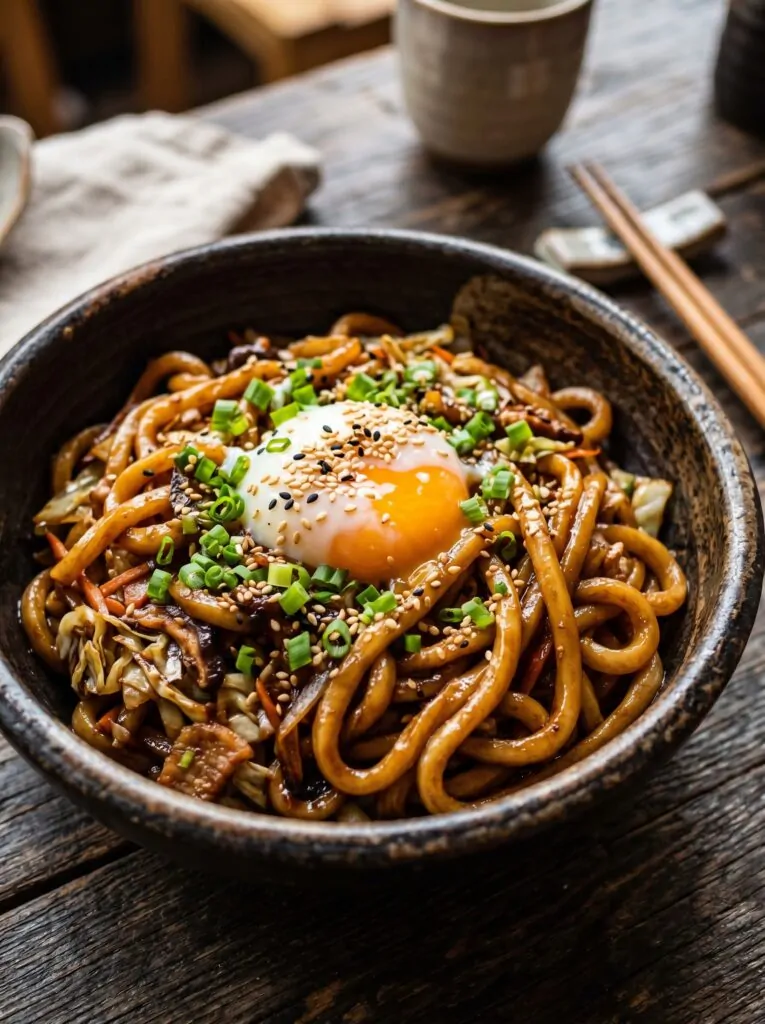
Delicious Yaki Udon Noodles: A Flavorful Journey into Japanese Cuisine is a classic Japanese stir fry dish made with thick, chewy udon noodles quickly tossed in a hot pan with protein, vegetables, and a savory soy-based sauce that clings to each strand, creating a glossy, deeply flavorful finish.
It typically includes ingredients like udon noodles, soy sauce, garlic, sesame oil, and crisp vegetables, often paired with chicken or beef. The result is a rich, umami-packed noodle stir fry with tender bites, lightly charred edges, and a satisfying balance of savory, slightly sweet, and smoky flavors rooted in Japanese street food culture.
You Might Also Love These Recipes
- Mediterranean Vegetable Pasta Bake. Tender pasta baked with roasted vegetables and rich tomato sauce, filling the kitchen with warm, herby aromas.
- Beef Belly Bites. Crispy outside with juicy centers, glazed in a savory sauce that delivers deep, mouthwatering flavor in every bite.
- Louisiana Crawfish Boil Juicy crawfish simmered in bold spices, releasing a smoky, steamy aroma that feels lively and full of flavor.
- Sausages and Mashed Potatoes. Creamy mashed potatoes paired with sizzling sausages, offering a buttery, savory bite that feels hearty and comforting.
Why You’ll Love
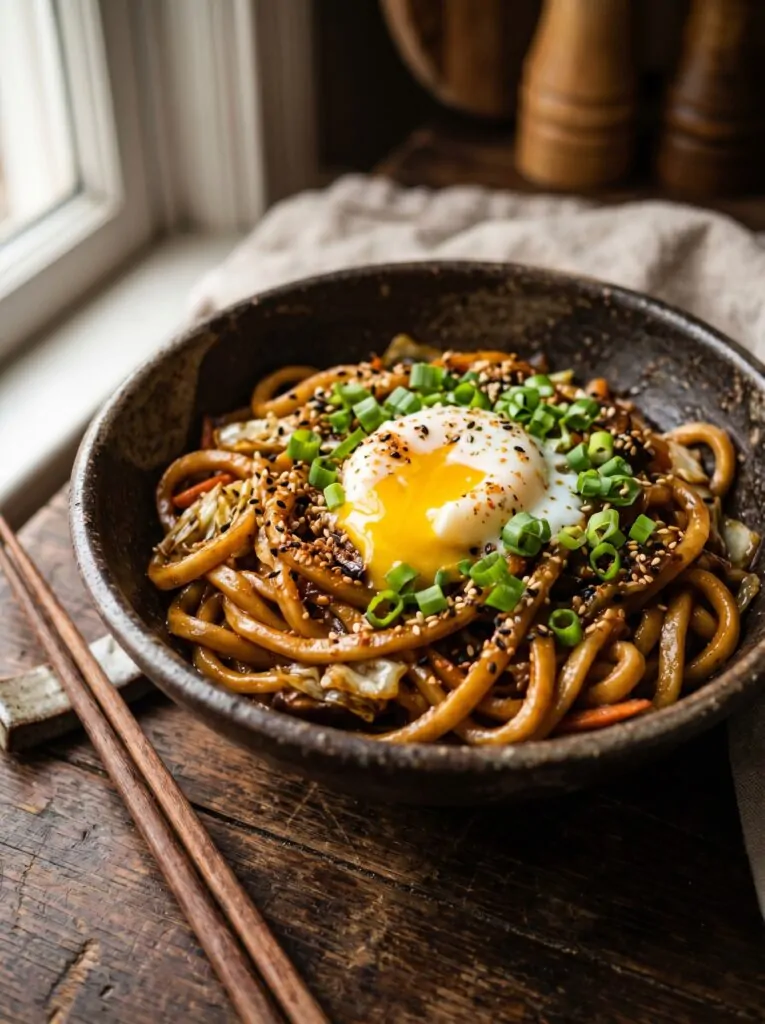
- Perfect chewy texture. Thick udon noodles stay tender with a slight bite, paired with crisp vegetables that add a satisfying contrast.
- Deep savory flavor. A glossy soy-based stir fry sauce coats every strand, delivering rich umami with hints of garlic and sesame.
- Simple to make. Straightforward steps and one-pan cooking keep things easy, even on busy nights when energy feels low.
- Ready in 25 minutes. This quick yaki udon recipe comes together fast, filling your kitchen with irresistible sizzling aromas.
- Pantry-friendly ingredients. Soy sauce, garlic, and noodles combine with fresh vegetables for a balanced, accessible Japanese noodle stir fry.
- Flexible and versatile. Swap proteins, adjust spice, or go vegetarian, making it perfect for weeknights, gatherings, or cozy solo dinners.
Key Ingredients
- Udon noodles. Thick, chewy noodles create that signature bite and glossy finish in this Japanese noodle stir fry. Use fresh or vacuum-packed for best texture.
- Chicken breast. Lean, tender slices cook quickly and stay juicy with proper heat. Slice thinly against the grain for even, silky bites.
- Soy sauce. Deep, salty umami forms the base of the yaki udon sauce. I prefer Kikkoman low-sodium for balanced flavor without overpowering.
- Sesame oil. Nutty aroma adds warmth and depth right at the end. Drizzle lightly after cooking to preserve its fragrant, toasted scent.
- Garlic. Fresh cloves release a bold, savory aroma when sizzling in oil. Use a microplane for a finer texture that blends seamlessly.
- Bell peppers. Bright, crisp slices bring sweetness and color contrast. Choose red or yellow for a slightly sweeter, juicier bite.
- Carrots. Thin julienned strips add gentle crunch and subtle sweetness. Cut evenly so they soften without losing that fresh snap.
- Green onions. Mild, slightly sharp flavor brightens the final dish. Add at the end for a fresh pop of color and light crunch.
- Vegetable broth. Light liquid helps loosen the sauce while adding depth. Use low-sodium broth to control salt and keep flavors clean.
How to Make Delicious Yaki Udon Noodles: A Flavorful Journey into Japanese Cuisine
- Boil the noodles. Cook udon noodles in gently bubbling water until tender yet chewy, about 2 to 3 minutes. Rinse under cool water to stop cooking and prevent sticking.
- Whisk the sauce. Combine soy sauce, sesame oil, and broth until smooth and glossy. This simple yaki udon sauce should smell savory and lightly nutty.
- Heat the pan. Place a large skillet or wok over medium-high heat until hot and slightly smoking. A properly heated pan creates that signature sizzling stir fry aroma.
- Sear the chicken. Add sliced chicken in a single layer and let it brown undisturbed. Listen for a steady sizzle and cook until lightly golden and juicy.
- Add aromatics. Toss in garlic and stir quickly until fragrant, about 30 seconds. The smell should turn rich and inviting without burning.
- Stir fry vegetables. Add bell peppers and carrots, tossing over high heat until vibrant and slightly crisp. Keep them moving for even cooking and bright color.
- Deglaze and combine. Pour in the sauce and scrape the pan to lift browned bits. Let it simmer briefly until slightly thickened and glossy.
- Toss the noodles. Add udon and gently fold everything together until coated and heated through. The noodles should look shiny and feel silky.
- Finish and serve. Scatter green onions on top and give a final toss. Serve immediately while hot, with steam rising and flavors at their peak.
Zara’s Expert Tips
- Use high heat wisely. After making this 100+ times, I always cook this Japanese noodle stir fry over medium-high heat so ingredients sear quickly and develop that light, smoky aroma.
- Don’t overcook the noodles. Udon should stay springy and chewy, never soft or mushy. Rinse briefly and toss with a drop of oil to keep strands glossy and separated.
- Slice everything evenly. Thin, uniform cuts ensure quick cooking and balanced texture. When vegetables hit the pan, you want that crisp bite and bright color, not uneven softness.
- Balance the sauce carefully. Taste before adding noodles and adjust with a teaspoon of soy sauce or splash of broth until the yaki udon sauce smells savory and rounded.
- Prep ahead for speed. Chop vegetables and mix sauce up to 24 hours ahead, storing chilled. This keeps the cooking flow smooth and lets you focus on that sizzling finish.
- Trust simple wisdom. My grandmother always said, “Listen to the pan.” When the sizzle softens, it is time to stir, keeping flavors bold and perfectly cooked.
How to Store
- Refrigerator storage. Store leftovers in an airtight container for up to 3 days. Noodles will soften slightly but still taste savory and satisfying when reheated.
- Freezer option. Freeze in portioned containers for up to 1 month. Texture becomes softer after thawing, so expect less chew but still good flavor.
- Make-ahead prep. Slice vegetables and mix the sauce up to 24 hours ahead, storing separately in the fridge to keep flavors fresh and crisp.
- Revive leftovers. Reheat in a hot pan with a splash of broth or water, tossing until glossy and warmed through to restore moisture and aroma.
- Lunchbox packing. Divide into single portions and cool completely before sealing. Keeps well for next-day meals, with flavors deepening and blending overnight.
Variations and Substitutions
- Beef swap. Replace chicken with thinly sliced beef for a richer, savory bite that caramelizes beautifully and adds deeper umami flavor.
- Shrimp version. Use peeled shrimp for a lighter option with a sweet, tender texture that pairs perfectly with the glossy yaki udon sauce.
- Vegan option. Swap protein for tofu and use vegetable broth, creating a vegan yaki udon that still tastes hearty and full of savory depth.
- Gluten-free swap. Use gluten-free tamari and rice noodles for a softer, slightly slippery texture while keeping that classic Japanese noodle stir fry flavor.
- Spicy twist. Add chili paste or sriracha for a gentle heat that builds with each bite, balancing the sweet and savory sauce.
- Kid-friendly version. Reduce garlic and skip spice, creating a milder, slightly sweeter flavor that still delivers soft noodles and comforting taste.
- Budget-friendly swap. Use cabbage and onions instead of peppers for a sweeter, tender crunch that keeps the dish affordable and satisfying.
What to Serve
- Grilled teriyaki chicken. Juicy, slightly charred chicken adds smoky sweetness that pairs beautifully with the savory, glossy noodles.
- Pan-seared salmon. Crisp skin and tender, flaky center bring richness that balances the chewy texture of this Japanese noodle stir fry.
- Cucumber sesame salad. Cool, crunchy slices with a light tang refresh the palate between warm, savory bites of yaki udon.
- Steamed edamame. Soft, lightly salted beans offer a simple, buttery contrast and keep the meal feeling balanced and satisfying.
- Iced green tea. Clean, grassy notes and gentle bitterness cut through the rich sauce, leaving a refreshing, smooth finish.
- Mochi ice cream. Soft, chewy exterior with cold, creamy filling gives a sweet, cooling end after a warm, savory meal.
Frequently Asked Questions
Can I make yaki udon ahead of time?
Yes, you can prep ingredients up to 24 hours ahead and store them separately. Cooked noodles are best fresh, but the full dish can be made a few hours early and gently reheated.
How long does yaki udon last in the fridge?
Yaki udon lasts up to 3 days in an airtight container in the refrigerator. The noodles soften slightly over time but still taste savory and satisfying when reheated properly.
Can I substitute udon noodles with something else?
Yes, you can use rice noodles or even spaghetti if needed. The texture will be less chewy, but the sauce still clings nicely and delivers a similar savory flavor.
Is this recipe gluten-free?
Not by default, since soy sauce and udon contain gluten. To make it gluten-free, use tamari and certified gluten-free noodles like rice noodles or gluten-free udon alternatives.
Why is my yaki udon watery?
Watery yaki udon usually comes from excess moisture in noodles or vegetables. Pat noodles dry and cook over high heat so liquid evaporates quickly and the sauce turns glossy.
How do I reheat yaki udon without drying it out?
Reheat in a hot pan with 1 to 2 tablespoons of water or broth. Toss gently until warmed through and glossy, which helps restore moisture and keeps noodles tender.
Can I double this recipe for a crowd?
Yes, but cook in batches for best results. Overcrowding the pan traps steam, preventing that light sear and slightly smoky aroma that makes yaki udon taste authentic.